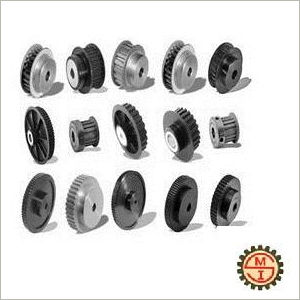
About Timing Belt Pulleys
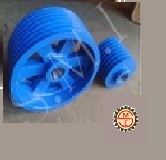
Timing Belt Pulleys
Features:
- Denmark Standard 2215, British Standard 3790
- conditionally resistant to oil
- temperature range, depending on application, from -20°C to +100°C
- suitable for tropical climates
- resistant to aging and ozone
- maintenance-free
- suitable for counter bendings
Specification
| Shape | Round |
| Product Type | Belt pulley |
| Brand | SMI |
| Material | Stainless Steel(SS) |
| Usage/Application | Industrial |
| Size | 1.5 Inch, 2Inch, 4Inch |
Each timing belt pulley is precision machined to deliver enhanced accuracy, strength, and reliability in mechanical power transmission. The robust aluminum alloy construction offers superior performance, while anodizing ensures a resilient, anti-corrosive finish. These pulleys are tailored to meet demanding operational standards in automation and industrial machinery.
Versatile Configurations for Diverse ApplicationsAvailable in a wide range of teeth profiles and diameters, our pulleys are compatible with multiple belt widths and customizable bore sizes. Whether your system requires HTD, XL, L, T2.5, T5, or AT5 profiles, our solutions easily integrate into both new and existing mechanical setups, accommodating varied load requirements.
FAQs of Timing Belt Pulleys:
Q: How do I select the appropriate timing belt pulley for my application?
A: Choosing the right pulley involves assessing your systems required teeth profile, belt width, bore size, and load capacity. Consider your operating temperature range, desired diameter, and groove requirements. Our team can assist in identifying the best fit for your mechanical power transmission or automation setup.
Q: What is the manufacturing process for these pulleys?
A: Our pulleys are produced using precision machining with high-grade aluminum alloy, followed by anodizing to achieve a durable, corrosion-resistant surface. Each unit is finished to ISO 2768-m tolerances to ensure consistent quality and compatibility.
Q: When should timing belt pulleys with anodized surfaces be used?
A: Opt for anodized surfaces in environments prone to humidity, exposure to chemicals, or where corrosion resistance and longer lifespan are essential. The anodized layer protects the aluminum from oxidation, enhancing both durability and visual appeal in industry applications.
Q: Where are these pulleys commonly used?
A: They are widely utilized in mechanical power transmission, automation systems, and various industrial sectors such as manufacturing, robotics, and material handling. Their adaptability makes them ideal for both custom and standard applications.
Q: What are the benefits of using aluminum alloy timing belt pulleys?
A: Aluminum alloy pulleys offer high strength-to-weight ratio, excellent corrosion resistance due to anodizing, and reliable performance under dynamic loads. Their lightness contributes to energy efficiency and their robust design ensures extended operational life.
Q: How does customizable bore size improve pulley usage?
A: Customizable bore options (e.g., 8mm, 10mm, 12mm) allow for seamless integration with different shaft sizes, reducing installation effort and ensuring optimal power transmission for varied machinery setups.






 Send Inquiry


 Send Inquiry